Over the past week, I lost quite a bit of motivation for doing practical work. So all I've done in terms of maya work is to roughly block out the scene geometry but I've not gone as far as lighting or texturing or a colour pass.
Ryan and I discussed the project Aim as I felt it was a bit naff, or didn't quite illustrate what my project was about and he agreed. So I just need to reword it and remember that I'm using the game environment as a visual storytelling aid or device to help tell a story or convey a mood, and not as the primary narrative device. So the aim needs reworked.
Brought up a copy of a rough introduction and went through it with Ryan because I'd never really brought him any of my written work and I think that if I make a push to bring in a bit every week it'll ensure I'm keeping to the right path and actually motivate me to keep it up and not leave it all lounging in the back of my mind. So we went through that and isolated the parts which weren't really relevant and drew attention to the more important sections.
Next thing to do is to regain my motivation by perseverance and make a big push for practical work to show next week. Ryan wants to see the basics blocked out of the drug abuse scenario and an idea of the lighting / colour pass. So that'll be this weeks tasks.
Showing posts with label Research Methods. Show all posts
Showing posts with label Research Methods. Show all posts
Monday, 25 March 2013

Monday, 25 February 2013
Supervisor Meeting 25.02.13
Met up with Ryan today and had a chat about work. To be honest I hadn't managed to make much progress since last week due to laptop problems but hopefully that's been resolved now. I had managed to watch Requiem for A Dream but I hadn't made many notes on it's relevance to the project as I got too into it, so another watch may be needed!
Looked at the colour scripts from UP intro to see how effective the use of colour was in terms of conveying mood and atmosphere in a snapshot moment.
I told Ryan that I'd decided to keep Heavy Rain as one of my case studies because despite it being more of an interactive cinematic experience based on choice and consequence than a game which uses environmental narrative as effectively as Portal or Bioshock, I still felt it made good use of colour and contrained some of the influencing factors identified in my critical framework criteria. This is particularly true in relation to the comparison between Ethan's house in the beginning of the game and the one he inhabits throughout the rest of the story. The lizard trial room also reflects his current state of mind, so would be useful to examine with the framework in mind. I just have to make sure that I'm analysing it in terms of what I'm actually looking for in my project, and make sure it has the correct aspects.
The main action points for this week are;
Make sure I'm considering symbolism and deeper implicated emotions rather than looking at things at face value i.e Red indicates danger etc.
Ryan suggested I watch a film called What Dreams May Come which involves a heaven made out of paint, which sounds cool so I'll need to see if I can get hold of that, in addition to the other movies I've not managed to get hold of yet.
Ryan said he wants to see a practical response to all the research I've been doing, which is fair enough because I've kinda been neglecting the practical side in favour of reading more about the psychology behind the theories so I'll need to try and actually put those techniques and theories into practice and write about them.
Also need to have a bit more of a go at my dissertation because right now I'm looking at it in fear and only doing very very bitesize chunks as it's been overwhealming me. I think I'll start by bulking out my case studies in relation to my new critical framework and see where that gets me.
Looked at the colour scripts from UP intro to see how effective the use of colour was in terms of conveying mood and atmosphere in a snapshot moment.
I told Ryan that I'd decided to keep Heavy Rain as one of my case studies because despite it being more of an interactive cinematic experience based on choice and consequence than a game which uses environmental narrative as effectively as Portal or Bioshock, I still felt it made good use of colour and contrained some of the influencing factors identified in my critical framework criteria. This is particularly true in relation to the comparison between Ethan's house in the beginning of the game and the one he inhabits throughout the rest of the story. The lizard trial room also reflects his current state of mind, so would be useful to examine with the framework in mind. I just have to make sure that I'm analysing it in terms of what I'm actually looking for in my project, and make sure it has the correct aspects.
The main action points for this week are;
Make sure I'm considering symbolism and deeper implicated emotions rather than looking at things at face value i.e Red indicates danger etc.
Ryan suggested I watch a film called What Dreams May Come which involves a heaven made out of paint, which sounds cool so I'll need to see if I can get hold of that, in addition to the other movies I've not managed to get hold of yet.
Ryan said he wants to see a practical response to all the research I've been doing, which is fair enough because I've kinda been neglecting the practical side in favour of reading more about the psychology behind the theories so I'll need to try and actually put those techniques and theories into practice and write about them.
Also need to have a bit more of a go at my dissertation because right now I'm looking at it in fear and only doing very very bitesize chunks as it's been overwhealming me. I think I'll start by bulking out my case studies in relation to my new critical framework and see where that gets me.
Thursday, 21 February 2013
Colour Psychology
To tie in with the "states of mind" project idea I posted about previously, I've been looking into certain aspects of psychology in relation to light, colour and surroundings and trying to identify the key areas to research into in order to better understand the relationship between the environment and how it can affect and reflect a person's mental state. I have found a couple of useful journals but most of the ones which sound like they would really help me, do not have Abertay on the list of recognised Institutions with access to the journals. So I've got in touch with a friend of mine who is studying Psychology in Glasgow and have asked her to recommend some journal sites or books I can skim through to get a quick overview and a deeper understanding of what I'm hoping to implement and achieve.
Tuesday, 19 February 2013
Supervisor Meeting 18.02.13
Met with Ryan yesterday to chat about how the presentation went and address any issues I had.
First off I need to produce a bunch of ideas/doodles/sketches to convey ideas for the 4 rooms project - how they can tell a story or incorporate themes, in terms of the story of a relationship idea it would be love/hate etc.
I'm also going to be looking into the psychological effects of light and colour, which is something i've always been interested in, and watching a few films that use colour to reinforce the central themes and ideas of the movies. Looking at colour scripts would also be a good idea.
An idea that we stumbled across that I'd really like to explore is the idea of "states of mind". The idea behind this is that each room would be a representation of a different psychological state - depression, joy, anti-stress etc. I actually really like this idea but one of the things I need to watch out for is that I don't just end up creating a "box room" and throwing a lot of props inside it to illustrate the themes. I know that the caves from Dear Esther would be a great example to look into in terms of abstract representation of a declining state of mind, but I'm not sure yet just how literal or abstract I want the "rooms" to be, or even if they can be all structured rooms or feature cave-like structures too. So that's something I need to think about, research and explore.

I've mainly been focusing on studying other games for case studies in relation to my framework, but Ryan suggested I also look into films which make good use of light/colour as being an older, more traditional medium, the core theories will have been established in them, and then adapted over to games (which is a point I have examined briefly in a previous post in relation to how narrative technique for films does not translate over to games very well as they involve spatial exploration and choice, rather than being explicitly shown something important like in films.) He suggested I look at Apocalypse Now and Requiem for a Dream for some good examples of a film which uses lighting to effectively convey it's central themes.


In terms of colour, some films I can look at are the Adventures of Baron Munchausen, which Ryan said has a painterly quality in his scenes so I'm intrigued to have a watch of that, if I can find it.


Finally, I'm also going to try and get my hands on Susperia from director Dario Argento, who uses colour to illustrate delusion and paranoia, so that fits right in to the "states of mind" idea.
Finally, I'm also going to try working with Vray, which I've never used before but is a powerful rendering tool, especially for photo-realistic lighting setups. Depending on how literal or abstract I want these rooms to be, it'll be worth looking into either way.
First off I need to produce a bunch of ideas/doodles/sketches to convey ideas for the 4 rooms project - how they can tell a story or incorporate themes, in terms of the story of a relationship idea it would be love/hate etc.
I'm also going to be looking into the psychological effects of light and colour, which is something i've always been interested in, and watching a few films that use colour to reinforce the central themes and ideas of the movies. Looking at colour scripts would also be a good idea.
An idea that we stumbled across that I'd really like to explore is the idea of "states of mind". The idea behind this is that each room would be a representation of a different psychological state - depression, joy, anti-stress etc. I actually really like this idea but one of the things I need to watch out for is that I don't just end up creating a "box room" and throwing a lot of props inside it to illustrate the themes. I know that the caves from Dear Esther would be a great example to look into in terms of abstract representation of a declining state of mind, but I'm not sure yet just how literal or abstract I want the "rooms" to be, or even if they can be all structured rooms or feature cave-like structures too. So that's something I need to think about, research and explore.

I've mainly been focusing on studying other games for case studies in relation to my framework, but Ryan suggested I also look into films which make good use of light/colour as being an older, more traditional medium, the core theories will have been established in them, and then adapted over to games (which is a point I have examined briefly in a previous post in relation to how narrative technique for films does not translate over to games very well as they involve spatial exploration and choice, rather than being explicitly shown something important like in films.) He suggested I look at Apocalypse Now and Requiem for a Dream for some good examples of a film which uses lighting to effectively convey it's central themes.


Finally, I'm also going to try and get my hands on Susperia from director Dario Argento, who uses colour to illustrate delusion and paranoia, so that fits right in to the "states of mind" idea.
Finally, I'm also going to try working with Vray, which I've never used before but is a powerful rendering tool, especially for photo-realistic lighting setups. Depending on how literal or abstract I want these rooms to be, it'll be worth looking into either way.
Friday, 8 February 2013
Critical Framework
After speaking to Ryan last week I went off and read a few project dissertations and proposals on similar research projects to help identify my critical framework criteria. I also took notes from various GDC conference presentations that I'd looked at, and drew up a list of what I thought were influencing factors in environmental narrative.
Ambient:
Colour
Lighting/Shadows
Materials/Textures
Space
*Sounds. (No sound will be used in final environment.)
Framing
Geography (Vistas)
Architecture
Narrative;
Player Created Space
Scenes, Events and Vignettes
Props;
Artefacts
Decals
Effects
Posters and Graffiti
Navigational;
Beacon
Signpost
Trail
I'll be using this framework criteria to analyse scenes in games to see how effectively they can be used in conveying narrative.
Compiled the info into a mind map to make it a bit clearer:

Ambient:
Colour
Lighting/Shadows
Materials/Textures
Space
*Sounds. (No sound will be used in final environment.)
Framing
Geography (Vistas)
Architecture
Narrative;
Player Created Space
Scenes, Events and Vignettes
Props;
Artefacts
Decals
Effects
Posters and Graffiti
Navigational;
Beacon
Signpost
Trail
I'll be using this framework criteria to analyse scenes in games to see how effectively they can be used in conveying narrative.
Compiled the info into a mind map to make it a bit clearer:

Tuesday, 5 February 2013
Supervisor Meeting
So I met up with Ryan on Friday and spoke about some of the issues I was having with my project, one of the main ones being that I wasn't actually sure where I was heading with the final piece of my project.
After a good discussion Ryan helped me narrow down what I could do with my final piece and I'm feeling much calmer about it all. We agreed on a few action points that I would complete as milestones before this Friday 8th Feb.
1) Work through a tutorial in the Advanced Texture and Lighting book Ryan lent me, and try out 3-4 different lighting setups and comment on what the lighting says in terms of the narrative effect.
2) Refine the Project Aim and decide whether or not to keep the characterisation element within the environment (as I had previously focused on showing character through the environment, but Ryan suggested that this was more to do with personification rather than environmental narrative.)
3) Have a go at further defining the Critical Framework by identifying the criteria for analysis in Environmental Narrative
We also had a discussion about what my final project piece could be and I'm currently playing with the idea of designing 4 different rooms, each intent on conveying a different mood/atmosphere, utilizing the techniques of narrative storytelling. This could involve experimenting with animated lighting, so I'm going to be looking for tutorials on that in the book and online.
After a good discussion Ryan helped me narrow down what I could do with my final piece and I'm feeling much calmer about it all. We agreed on a few action points that I would complete as milestones before this Friday 8th Feb.
1) Work through a tutorial in the Advanced Texture and Lighting book Ryan lent me, and try out 3-4 different lighting setups and comment on what the lighting says in terms of the narrative effect.
2) Refine the Project Aim and decide whether or not to keep the characterisation element within the environment (as I had previously focused on showing character through the environment, but Ryan suggested that this was more to do with personification rather than environmental narrative.)
3) Have a go at further defining the Critical Framework by identifying the criteria for analysis in Environmental Narrative
We also had a discussion about what my final project piece could be and I'm currently playing with the idea of designing 4 different rooms, each intent on conveying a different mood/atmosphere, utilizing the techniques of narrative storytelling. This could involve experimenting with animated lighting, so I'm going to be looking for tutorials on that in the book and online.
Thursday, 10 January 2013
Visual Sign Posting in Games
A technique many games make good use of, is visual sign-posting. A notable example being Journey from ThatGameCompany. The game begins without context in which the only apparent objective is to approach the large mountain on the horizon which has a bright light atop it. The use of light to highlight areas of interest in games in highly effective.

This subtly suggests to the player that this is the direction in which the must proceed. Simple sign posting such as this makes the player feel as though they are exploring the game world based on their instincts and their own choices, as opposed to the designers intention. Mysterious ruins scattered throughout the desert landscape provide hints at the back-story of the game.


Mirror's edge, though an older game, makes good use of the colour red to define the intended path to the player. It indicates objects which can be climbed/run over etc. Though a clear path, such obvious visual sign posting as this can have the effect of making the player continuously aware that they are playing a game, as climbable objects in real life are not simply all the same colour. It can even reinforce to the player all the current constraints that the game imposes on their play, and furthermore, makes them at all times aware that they are following an intended path. Journey's approach to visual sign posting felt much more natural. A slight breeze pointing you in the right direction, whereas Mirror's Edge's approach is more like a sharp prod.
Dear Esther, from Thechineseroom received much critical acclaim due to its innovative approch to environmental storytelling and have even been the spark of yet another debate about what constitutes a game, and whether or not games are art. The lead artist, Robert Briscoe spoke at the 2012 Game Developers Conference about adding history to the environment through the implementation of details such as old shipwrecks, to build a past and not just a present, and stated that this helps to define the reality of the game world.
shipwreck.jpg)
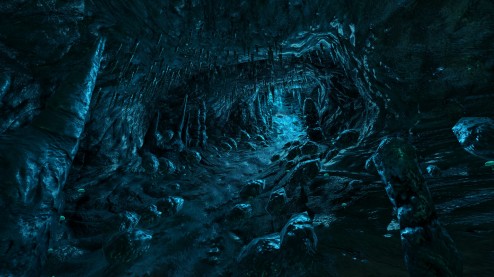
Both Journey and Dear Esther use this technique excellently in that the implications of a time long past is soft and subtle enough not to remove the player from the game. Light was important in Dear Esther, as it was in Journey. Especially in the caves, the light represented a path to follow, furthered by the glowing patterns and writing on the walls.
Thursday, 3 January 2013
Well it's been a while...
It's been longer than I'd like since my last update. This was due to project proposal madness. Finding out that the majority of my research wasn't as relevant as I thought was definitely a blow but it meant I still had some time to restructure. Now that's handed in and I just have to cross my fingers and hope that I've done everything right and expressed my project aims and research effectively without somehow managing to plagiarise someone else's work, which I'm petrified of.
I went back home for the holidays, which is another reason my posts have been stunted as my home is now an internetless void, which was a horrible Christmas surprise...
Anyway, onwards to some more work. My next post will be a compilation of game environment analysis and contrasting some of the techniques undertaken by the art teams involved in their creative approach to environmental storytelling.
I went back home for the holidays, which is another reason my posts have been stunted as my home is now an internetless void, which was a horrible Christmas surprise...
Anyway, onwards to some more work. My next post will be a compilation of game environment analysis and contrasting some of the techniques undertaken by the art teams involved in their creative approach to environmental storytelling.
Wednesday, 5 December 2012
Supervisor Meeting!
So Yesterday I had my first meeting with Ryan Locke, who'll be my honours project supervisor from here on in.
After chatting with him and going through my big book o' quotes, I realised I've been going off on a tangent a bit more than I meant to. I've been collecting information more relative to the changing forms of narrative and how it's affected by interactivity, rather than putting more focus on the environment side of things, which is what my project is meant to be all about....
Unfortunately this means quite a large chunk of the research I've done is now pretty much obsolete...

but better to realise this now than next week, 2 days before submission :|
So I need to refocus and eliminate the references and quotes I've got which are less relevant and restructure my proposal.
Chatting to Dayna and Ryan helped me nail down a list of games, in addition to Heavy Rain and Bioshock, which are really powerful examples of environmental storytelling, so I'm going to get my head down and look into them more extensively.


After chatting with him and going through my big book o' quotes, I realised I've been going off on a tangent a bit more than I meant to. I've been collecting information more relative to the changing forms of narrative and how it's affected by interactivity, rather than putting more focus on the environment side of things, which is what my project is meant to be all about....
Unfortunately this means quite a large chunk of the research I've done is now pretty much obsolete...
but better to realise this now than next week, 2 days before submission :|
So I need to refocus and eliminate the references and quotes I've got which are less relevant and restructure my proposal.
Chatting to Dayna and Ryan helped me nail down a list of games, in addition to Heavy Rain and Bioshock, which are really powerful examples of environmental storytelling, so I'm going to get my head down and look into them more extensively.

Spider - Legend of Bryce Manor

Portal, 1 &2

Journey

Dear Esther

Shadow of the Colossus
Resident Evil 4 (totally not playing that, zombies are a no-go zone for me)
During the meeting, we spoke about symbolism and how it can mean very different things to different cultures or in different context. Looking at churches in particular, which are extremely powerful symbols and are often the foundation and nature of a story. In Resident Evil or Silent Hill, the church is a symbol of control and corruption, whereas in Final Fantasy 7, Aerith is laid down in the church under a beam of brilliant light, which is an entirely different symbol of something magnificent and poignant. With these idea in mind it might be useful to explore how symbols are used and interpreted with the context.
With all of this to consider, it's time to make a new to do list since the old one is pretty much complete/redundant.
Meeting with Dayna
On Monday I had a meeting with Dayna, who isn't my project supervisor but he's interested in interactivity and storytelling so he seemed like a good person to speak to! Also he saw me tweeting about my project and offered to meet up in uni and have chat about it. I had a meeting with Ryan (my supervisor yesterday which I'll talk more about in another post.
Dayna pointed me to a whole load of GDC conference pdfs and presentations which will be massively helpful to me research, not just in the proposal but will form a good chunk of the foundation of my dissertation, so that was definitely worth while.
He brought up stuff like the secret rooms in Portal 2, how the player is rewarded with these little pieces of narrative for exploring the environment fully. He also suggested I look at Spider - The Legend of Bryce Manor from Tigerstyle games, so I'll need to give that a look in soon!
He also said that I can use PHD Dissertations as a reference which is something I wasn't sure if we were allowed to do, but this works out great because I found a really relevant doctorate dissertation online.
Dayna also suggested I look for some of Randy Smith's (Tigerstyle Games) written work as it would be helpful. He said I should find 2 to 3 people in the field who's views on environmental storytelling I agree with, and reference them.
Dayna pointed me to a whole load of GDC conference pdfs and presentations which will be massively helpful to me research, not just in the proposal but will form a good chunk of the foundation of my dissertation, so that was definitely worth while.
He brought up stuff like the secret rooms in Portal 2, how the player is rewarded with these little pieces of narrative for exploring the environment fully. He also suggested I look at Spider - The Legend of Bryce Manor from Tigerstyle games, so I'll need to give that a look in soon!
He also said that I can use PHD Dissertations as a reference which is something I wasn't sure if we were allowed to do, but this works out great because I found a really relevant doctorate dissertation online.
Dayna also suggested I look for some of Randy Smith's (Tigerstyle Games) written work as it would be helpful. He said I should find 2 to 3 people in the field who's views on environmental storytelling I agree with, and reference them.
Saturday, 1 December 2012
GDC 2010 - Game Environments
Smith and Worch state that a game environment;
a) Constrains and guides player movement through physical properties and ecology (the relationship between living things, in this case, the player - and the environment)
b) Uses player reference to communicate simulation boundaries and affordance
c) Reinforces and shapes player identity
d) Provide narrative context
Environmental Narrative is mostly concerned with the latter two.
1. Constrains and Guides


3. Reinforces Player Identity
"The environment shapes and reinforces the identity of the player." Smith states that identity is shaped by both performance and context. Essentially, that games ask players to assume an identity, contextualize this identity within the game environment, which in turn often implies or encourages social conventions and behaviours. The contrast of textures and colours of the environment in Heavy Rain before and after Jason's death, help to convey a state of decay and overall depression and at times - desperation, which makes the player feel more secure in the justification of their difficult and at times, morally grey choices.
Again, the Heavy Rain case study works well here as it is all about social factors such as relationships and presents you with the boundaries of what you would be capable of in an unthinkable situation.

Heavy Rain forces the player to make impossible decisions and presents various moral dilemmas to the player. Their choices and actions in relation to these dilemmas shape the path of the game, making for more personal and meaningful play.
In contrast, the environment in Portal makes you feel like a test subject (which you are) The simple shapes, textures and clean cut lines, in conjunction with the restricted colour palette lends itself better to a puzzle game. We can see that the environment contextualizes experience and exerts influence over the identity of the player during play.

4. Narrative Context
The game environment generated from a fictional storyline can convey;
That's why Heavy Rain is such a good example, the environments are so compelling and intricately designed that they speak volumes about the current events taking place, and even help to symbolise the current state of mind of the character and in turn, influence the state of mind of the player who assumes the identity of the character. The majority of the mood and story are expressed and deduced through the rich textures and props, and often need no further explanation.
Original Lecture available here; (http://www.worch.com/files/gdc/What_Happened_Here_Web_Notes.pdf)
a) Constrains and guides player movement through physical properties and ecology (the relationship between living things, in this case, the player - and the environment)
b) Uses player reference to communicate simulation boundaries and affordance
c) Reinforces and shapes player identity
d) Provide narrative context
Environmental Narrative is mostly concerned with the latter two.
1. Constrains and Guides

Looking at the opening scenes in Bioshock from 2KGames, the level layout of a decaying new years party gone wrong demonstrates the idea that "an environment constrains and guides player movement through physical properties and ecology". The physical properties are represented by walls/stairs etc and the gameplay ecology is made up of enemy and item placement.
Smith and Worch say that "we can also see that a game environment represents access and that the restrictions on access create decisions and meaningful play"
They use a diagram to convey this utilizing a level in Bioshock as an example, I'm going to use my own example from Heavy Rain and apply their principles to it.

The above is concept art for a scene during the "Lizard Trial" in Heavy Rain, which if you've read my previous blog posts you'll see a lot about as I've examined it in terms of play and monitored others as they played through. It preserves the same themes as the Bioshock example in terms of decay and decadence.

The above is a very simplistic diagram of a top-down view of the room. Using simple shapes and colours, I identified the physical properties of the environment by highlighting the walls and objects in thick black lines. The gameplay ecology is made up of item placement, and the items which you can interact with are represented in the diagram by the green circles. The objects outlines in red are the key areas of interest that you must interact with in order to further the story at all.
However this example differs from Smith and Worch's Bioshock example in that you can choose not to take part in the trial, and wait for the countdown timer to end, instead of taking action and utilizing the props in the room.
However this example differs from Smith and Worch's Bioshock example in that you can choose not to take part in the trial, and wait for the countdown timer to end, instead of taking action and utilizing the props in the room.
Nevertheless, we can see that a game environment represents access and that the restrictions on access create decisions, (you can select which objects to use, and have varying results, or choose not to partake in the trial at all), which in turn creates meaningful play.
2. Communicate Affordance
Through visual references or "affordance", the area itself communicates with the player. From what we've gathered from playing through previous trials, the monitor on the table represents a task to undertake, and the player can quickly understand that they are meant to sit in the chair and initiate the trial.
Through visual references or "affordance", the area itself communicates with the player. From what we've gathered from playing through previous trials, the monitor on the table represents a task to undertake, and the player can quickly understand that they are meant to sit in the chair and initiate the trial.
-Communicate Simulation Boundaries

When it comes to simulation boundaries, Heavy Rain presents a large variety of interactive actions but they are always within the context of the situation. For example, the scene in which Ethan and Shawn at at the park and Ethan is attempting to bond with him, there are various actions available to help ensure Shawn is cheered up, and various objects such as swings and seesaws to help you out. However, at no point is Ethan able to just ignore Shawn and go off and play on the swings and seesaw on his own. He needs to interact with Shawn first to identify what he wants to do. Therefore the player quickly comes to realise that while they have a certain amount of freedom regarding choice and consequence, the interactions must be in context, and the player comes to understand the simulation boundaries.
3. Reinforces Player Identity
"The environment shapes and reinforces the identity of the player." Smith states that identity is shaped by both performance and context. Essentially, that games ask players to assume an identity, contextualize this identity within the game environment, which in turn often implies or encourages social conventions and behaviours. The contrast of textures and colours of the environment in Heavy Rain before and after Jason's death, help to convey a state of decay and overall depression and at times - desperation, which makes the player feel more secure in the justification of their difficult and at times, morally grey choices.
Again, the Heavy Rain case study works well here as it is all about social factors such as relationships and presents you with the boundaries of what you would be capable of in an unthinkable situation.

Heavy Rain forces the player to make impossible decisions and presents various moral dilemmas to the player. Their choices and actions in relation to these dilemmas shape the path of the game, making for more personal and meaningful play.
In contrast, the environment in Portal makes you feel like a test subject (which you are) The simple shapes, textures and clean cut lines, in conjunction with the restricted colour palette lends itself better to a puzzle game. We can see that the environment contextualizes experience and exerts influence over the identity of the player during play.

4. Narrative Context
The game environment generated from a fictional storyline can convey;
- The history of what has happened in the setting
- Who currently inhabits it (if at all)
- Their living conditions
- What may happen next
- The practical purpose of the area
- The mood
When environmental narratives are fully utilized to their greatest potential, no external influence is required to anchor the plot, the world speaks for itself as the player progresses through it.
5. Environmental Storytelling
That's why Heavy Rain is such a good example, the environments are so compelling and intricately designed that they speak volumes about the current events taking place, and even help to symbolise the current state of mind of the character and in turn, influence the state of mind of the player who assumes the identity of the character. The majority of the mood and story are expressed and deduced through the rich textures and props, and often need no further explanation.
Original Lecture available here; (http://www.worch.com/files/gdc/What_Happened_Here_Web_Notes.pdf)
Friday, 30 November 2012
Environmental Narrative - Online Lecture
During my travels across the internet I found a lecture online which was actually, shock horror, relevant to my honours project. It focused specifically on narrative environments for games and is the first of it's kind I've managed to come across. Every other source I've found has either been more relevant to films or more inclined towards narrative in general, rather than environment-specific.
The lecture was presented at the GDC 2010 conference from two speakers, Harvey Smith - Game Director at Arkane Studios and Matthias Worch - Senior Level Designer at Visceral Games

Details can be found here http://www.worch.com/2010/03/11/gdc-2010/
and although I'm, going to go into detail about their lecture and apply their knowledge to my own research, the slides and speakers notes can be found directly here http://www.worch.com/files/gdc/What_Happened_Here_Web_Notes.pdf
The lecture examines game environments as a narrative device with focus on player interpreting/pulling information, in opposition to traditional fictional exposition.
The session is divided into five sections;
The lecture was presented at the GDC 2010 conference from two speakers, Harvey Smith - Game Director at Arkane Studios and Matthias Worch - Senior Level Designer at Visceral Games

Details can be found here http://www.worch.com/2010/03/11/gdc-2010/
and although I'm, going to go into detail about their lecture and apply their knowledge to my own research, the slides and speakers notes can be found directly here http://www.worch.com/files/gdc/What_Happened_Here_Web_Notes.pdf
The lecture examines game environments as a narrative device with focus on player interpreting/pulling information, in opposition to traditional fictional exposition.
The session is divided into five sections;
- 1. Game Environments- Lays the foundation and looks at what a game environment actually is and what it represents.
- 2. Environmental Storytelling - Define it, and looks at examples
- 3. Practical Techniques -
- 4. Systemic Environmental Storytelling - The two main forms of environmental storytelling, designer-authored and systemic. Presenting techniques and ideas.
- 5. Conclusion
In following blog posts I'll be covering these chronologically and relating them to my own research where I can.
Wednesday, 28 November 2012
The Evoloution of Visual Storytelling....Sort of
Visual storytelling finds it's roots in Cinematography. The principles with which we deconstruct a scene in a game are derived from the very same principles of early cinema and film, however they do not fully translate over to the realm of video games, in which the player is offered substantially more freedom.(Lowndes. 2010) The level of interactivity in games renders them completely different from more traditional media such as books and films, and presents a challenge to game writers as they must consider relatively unheard of factors such as the marriage between story and gameplay, to create and conserve a proper pace for story progression.(Lebowiz, Klung. 2011)


Visual storytelling in games first began (arguably) with the original Donkey Kong (1981), which was the first game to visually convey story progression through a series of cutscenes.
Technology back then placed a lot of limitations on what video games could and could not achieve. Early hardware meant that there was barely enough memory to do any more than move a few dots around the screen, and displaying a short text-based backstory on the side of the arcade machine was the established storytelling convention for games. However, technology has come on in leaps and bounds and now we have extremely powerful gaming systems which are capable of displaying impressive graphics and audio, and are now being used to explore the possibilities of varying storytelling techniques. Stories for games have developed from the simplistic kidnapped-girl plot of Donkey Kong to the complicated and interwoven novel length tales associated with modern RPG's such as Final Fantasy XIII.
With such powerful hardware, memory is no longer an issue and the true potential of rich and elaborate narratives can finally be realised. The interactivity offered to the player in relation to story manipulation have resulted in many different types of stories and many differing ways of telling stories within games, which is extremely difficult if not entirely impossible to convey in any other medium.(Lebowiz 2011) In addition to the extreme advances with graphics, sound and interactivity, narrative is fast becoming a highly important factor for contemporary games. The huge successes of character-driven games such as Tomb Raider and Hit Man, in conjunction with story-driven games such as Myst and Max Payne, have resulted in the games industry making an effort to develop more games with compelling narratives, and indicates that narrative is obviously now a "killer application" in the computer games industry. (Vordere, Bryant. 2009.)

Computer games are changing the way stories are being told. New narrative-driven games such as QuanticDream's Heavy Rain and their new development Beyond:Two Souls are pushing the boundaries for game narrative, and receiving high critical acclaim for their efforts. K Santiago described games as "the birth of an entirely new artistic medium". stating that games could in fact be the "collaboration between everything we've learned to date, as humans, about telling stories through visuals, through audio and now with the added component of interactivity." (Santiago. 2009)
Thursday, 22 November 2012
Methodologies.
The key theories I'll be looking into will be Structuralist
theory and Semiotics. Structuralism is the theoretical framework that
is used to understand language in relation to a larger system or
structure. It is also used in conjunction with
film theory to emphasise how films convey meaning though the use of
signs and conventions, based on social and cultural expectations.
Semiotics is the study of signs and the various connotations those
signs may have within specific cultures and societal groups. The
reason for adopting these particular theoretical approaches is because the environment I want to design must rely solely on visual cues to imply backstory and character, signs and connotations will be a fundamental part of my project.
Friday, 16 November 2012
To do List!
I've been having trouble motivating myself over the past week, partly due to feeling ill. So this happened...
 Sounds silly but I was in a rut and needed a way out of it! Found this website (http://www.facebook.com/l.php?u=http%3A%2F%2Fwww.pickthebrain.com%2Fblog%2Fhow-to-motivate-yourself%2F&h=vAQFwwPPM)
And I actually found it pretty helpful! It details the reasons we lose motivation and addresses the problem head on to understand it's more than just "I feel lazy therefore I'm not doing any work".
I found it really helpful, so if anyone is stuck in a rut or just finding it difficult to get on with work, I would really recommend you take at look at this webpage.

One of the things it suggests is to make a longterm "Focus" which is like a longterm Goal. For me this would be something like creating a milestone for work I need to have done such as;
Complete Research proposal
Although since I've got way more than just that to focus on I've picked a realistic list of things to get done, which won't be too overwhelming in the grand scheme of things.
Complete Research Proposal
Do more Concept Development
Continue Research into lead artists on Heavy Rain
Continue working on Heavy Rain case study
Now that I've identified my "focus" I need to find "Direction", which is a day to day strategy for achieving the Focus.
1. Block out remainder of Research Proposal.
2. Compile useful quotes into categories or chapters in the Lit Review
3. Take inspiration from Heavy Rain concept artists and continue modelling one of their concepts in Maya.
4.Find more info for Case Study, interviews etc.
5. Identify structure for Case study by looking at examples within dissertations on Blackboard.
So that forms the basis of my to do list. Depending on how much I get done over the weekened this will change on Monday.
Thinking it might be a good idea to come up with a new to do list or "Focus" each week and a smaller breakdown "Direction" of a daily to do list to achieve the weekly goal. If I put it up here it would probably motivate me more than just keeping it inside my brain and pushing it away. At least if it's up here it's out in the world and I'll feel the pressure to get it done!
Here's hoping anyway....
I'm also going to write it out and stick it on my wall so it's always there and I can't ignore it...

I'll add "buy a better colour highlighter" to that list....

And I actually found it pretty helpful! It details the reasons we lose motivation and addresses the problem head on to understand it's more than just "I feel lazy therefore I'm not doing any work".
I found it really helpful, so if anyone is stuck in a rut or just finding it difficult to get on with work, I would really recommend you take at look at this webpage.

One of the things it suggests is to make a longterm "Focus" which is like a longterm Goal. For me this would be something like creating a milestone for work I need to have done such as;
Complete Research proposal
Although since I've got way more than just that to focus on I've picked a realistic list of things to get done, which won't be too overwhelming in the grand scheme of things.
Complete Research Proposal
Do more Concept Development
Continue Research into lead artists on Heavy Rain
Continue working on Heavy Rain case study
Now that I've identified my "focus" I need to find "Direction", which is a day to day strategy for achieving the Focus.
1. Block out remainder of Research Proposal.
2. Compile useful quotes into categories or chapters in the Lit Review
3. Take inspiration from Heavy Rain concept artists and continue modelling one of their concepts in Maya.
4.Find more info for Case Study, interviews etc.
5. Identify structure for Case study by looking at examples within dissertations on Blackboard.
So that forms the basis of my to do list. Depending on how much I get done over the weekened this will change on Monday.
Thinking it might be a good idea to come up with a new to do list or "Focus" each week and a smaller breakdown "Direction" of a daily to do list to achieve the weekly goal. If I put it up here it would probably motivate me more than just keeping it inside my brain and pushing it away. At least if it's up here it's out in the world and I'll feel the pressure to get it done!
Here's hoping anyway....
I'm also going to write it out and stick it on my wall so it's always there and I can't ignore it...

I'll add "buy a better colour highlighter" to that list....
Tuesday, 13 November 2012
Heavy Rain : Participant test - 1
I decided to conduct a test to see how different people would play through the finger cut off scene in Heavy Rain. The idea behind this was that I could see how different people with varying levels of game playing experience would play the game and what would influence the choices they would make in game.
I got two people to play through the same scene (isolated, one after the other, without seeing each other's actions or choices) and I presented them with a quick overview of the backstory in the form of this questionnaire sheet;
Backstory
The protagonist is Ethan Mars, a 30-something father who's son Shawn has been kidnapped by the serial killer dubbed as the "Origami Killer".
The evaluation section was only revealed to them after the test, so their actions wouldn't be somehow influenced by what was written and cause them to anticipate certain circumstances. As they played I took notes on their playing style and afterwards I conducted a short interview based on the questions outlined above. Detailed results presented below;
I got two people to play through the same scene (isolated, one after the other, without seeing each other's actions or choices) and I presented them with a quick overview of the backstory in the form of this questionnaire sheet;
Participant experiment - "Finger Cutting Scene"
Backstory
The protagonist is Ethan Mars, a 30-something father who's son Shawn has been kidnapped by the serial killer dubbed as the "Origami Killer".
The killer is testing Ethan by leaving him a series of clues in the form of origami figures. When the figures are unfolded they contain clues to a series of traumatic and dangerous trials, which Ethan must chose whether to endure and complete in order to gain further information regarding where his son his being held, before the time is up and his son is killed.
The Test
This test involves a play-through of a single trial in which the player has a 5:00 minute time scale to chose whether to sacrifice something in order to gain more information about the whereabouts of his son. There will be a variety of objects scattered in the environment to aid the participant, and they can chose at any point within the 5:00 slot not to complete the trial. This will result in the trial being failed and no information will be gained from it.
This test involves a play-through of a single trial in which the player has a 5:00 minute time scale to chose whether to sacrifice something in order to gain more information about the whereabouts of his son. There will be a variety of objects scattered in the environment to aid the participant, and they can chose at any point within the 5:00 slot not to complete the trial. This will result in the trial being failed and no information will be gained from it.
Evaluation:
Did you complete the trial?
If No, why?
If Yes, why?
Which of the objects did you select and why?
What guided you to select these particular objects?
If No, why?
If Yes, why?
Which of the objects did you select and why?
What guided you to select these particular objects?
What did you feel during the trial? eg stress, anxiety, calm, focus.
Do you feel the environment in any way contributed to these feelings?
If so, what elements? eg colour, lighting, textures, contrast, props etc.
Do you feel the virtual environment/scene aided the plot?
Why?
Do you feel the environment in any way contributed to these feelings?
If so, what elements? eg colour, lighting, textures, contrast, props etc.
Do you feel the virtual environment/scene aided the plot?
Why?
Both Participants were non-gamers, that is to say, playing computer games is not something they chose to do on a regular basis. It may be worthwhile conducting another small focus group test with participants who have more experience in playing computer games, but have not yet played through Heavy Rain.
Participant 1 took a very direct route, heading straight for the chair and sitting down and pressing the play button. After the recorded message was played, they got up and pretty much went for the first object they could see which was the giant knife stuck in the wall.
Do you feel the environment in any way contributed to these feelings?
If so, what elements? eg colour, lighting, textures, contrast, props etc. It just looked really dirty and I wanted to get out as soon as you could, no messing about. It was dead enclosed, and there was nobody to help you
Do you feel the virtual environment/scene aided the plot?
Why? The broken wooden floors, holes in the wall all added to the distress of him lost his child - it's like it reflected his stress at the situation.
____________________________________________________________________
So I didn't immediately sit down in the chair, I took the opportunity to walk around the environment at my leisure, and investigated all the rooms in the dingy flat. I walked around and examined everything from the disinfectant in the medicine cupboard in the bathroom, to the hipflask in the cupboard in the kitchen, I even washed my hands at the sink. (albiet, by accident)
It may also be useful to allow participants to first play through a "tutorial" scene in order to get them more familiarized with the controls as these proved to be a problem for the non-gamer group, and admittedly was something I should have considered.
Both participants were heavily influenced by the control interface, they relied on the white symbol buttons to highlight usable objects to them rather than taking time to scout the environment in their own steed.
Participant 1
Participant 1 took a very direct route, heading straight for the chair and sitting down and pressing the play button. After the recorded message was played, they got up and pretty much went for the first object they could see which was the giant knife stuck in the wall.
Evaluation:
Did you complete the trial? Yes
If No, why?
If Yes, why? Because it asked me to, and I wanted to find my son.
Which of the objects did you select and why? Giant knife stuck in the wall, because it was the first thing I saw
What guided you to select these particular objects? Turned that way and saw it in the wall, and when I turned towards it the wee white symbol thing popped up.
If No, why?
If Yes, why? Because it asked me to, and I wanted to find my son.
Which of the objects did you select and why? Giant knife stuck in the wall, because it was the first thing I saw
What guided you to select these particular objects? Turned that way and saw it in the wall, and when I turned towards it the wee white symbol thing popped up.
What did you feel during the trial? eg stress, anxiety, calm, focus. Confusion, didn't really care about Ethan because he's not real and a pixelated man, the timer counting down was stressful and I didn't really understand so was even more confused.
Do you feel the environment in any way contributed to these feelings? It was dingy, made you feel dirty and in a place you really didn't want to be in. It looked boggin and was all burnt.
If so, what elements? eg colour, lighting, textures, contrast, props etc. It was dull, hardly any light - lead to more confusion, couldnt see a bloody thing. Colour - everything was dark and the same. Textures - looked like everything was falling apart, and elements of my life were falling apart.
Do you feel the virtual environment/scene aided the plot? yes
Why? pretty much all the reasons I said before. The white arrows were good at showing you where to go and what to do, they helped you see what was right.
I didn't want to mess about and go in other rooms cause I wasn't sure of controls and was pressured by the countdown timer. The knife was huge and in the wall at eye level so I saw it first.
Do you feel the environment in any way contributed to these feelings? It was dingy, made you feel dirty and in a place you really didn't want to be in. It looked boggin and was all burnt.
If so, what elements? eg colour, lighting, textures, contrast, props etc. It was dull, hardly any light - lead to more confusion, couldnt see a bloody thing. Colour - everything was dark and the same. Textures - looked like everything was falling apart, and elements of my life were falling apart.
Do you feel the virtual environment/scene aided the plot? yes
Why? pretty much all the reasons I said before. The white arrows were good at showing you where to go and what to do, they helped you see what was right.
I didn't want to mess about and go in other rooms cause I wasn't sure of controls and was pressured by the countdown timer. The knife was huge and in the wall at eye level so I saw it first.
Spotted a saw after I'd picked the knife up but didn't go for it cause it was serrated and would have taken longer. And I didn't know how to stand up...
The music built up the tension too.
Participant 2
Walked straight to the chair and sat down and pressed play, didn't have a look around. After recorded message, walked into bathroom and found the medicine cabinet, opened it and found a bottle which they assumed were painkillers, brings it to the table and sets it down. Turned round and spotted pliers by the wrecked tv, picked them up and set them down on table. Turned and went into the other room - the kitchen. Immediately spotted the hipflask due to camera angle. Didn't go for it. Washed hands at sink "to be clean"
Walked around the main room looking for objects, picked up saw and put it down on table. Sits down at table and used what they thought were painkillers - it was actually disinfectant, which worked out well. Selects pliers over saw and goes through with cutting off finger. Immediately says "A wee swig of the brandy from the kitchen would have been good for him"
Evaluation:
Did you complete the trial? Yes
If No, why?
If Yes, why? Cause thats what the game told me to do and I wanted to find my son.
Which of the objects did you select and why? Pliers, saw and disinfectant. I should have picked up the hip flask from the kitchen too.
What guided you to select these particular objects? Spotted the pliers and the saw because their green handles were brighter than the rest of the room so were more distinctive, and thats what attracted me to them. They were near the table too. Saw the scissors in the sink when i went to look at the medicine cabinet, spotted it because of the wee white symbol that appeared above it when I walked past. Saw the scissors in the sink but I didn't want them cause they were wee cheap scissors, common knowledge. I thought the disinfectant were painkillers and he would need them cause it would be sore.
If No, why?
If Yes, why? Cause thats what the game told me to do and I wanted to find my son.
Which of the objects did you select and why? Pliers, saw and disinfectant. I should have picked up the hip flask from the kitchen too.
What guided you to select these particular objects? Spotted the pliers and the saw because their green handles were brighter than the rest of the room so were more distinctive, and thats what attracted me to them. They were near the table too. Saw the scissors in the sink when i went to look at the medicine cabinet, spotted it because of the wee white symbol that appeared above it when I walked past. Saw the scissors in the sink but I didn't want them cause they were wee cheap scissors, common knowledge. I thought the disinfectant were painkillers and he would need them cause it would be sore.
I went into the kitchen cause I thought that's where all the sharp objects usually are. Noticed the hipflask in the cupboard cause of the camera angle, didn't think itd be useful but after I realised it would have been handy
What did you feel during the trial? eg stress, anxiety, calm, focus. Stressed when the countdown started, I wanted to save the child
Do you feel the environment in any way contributed to these feelings?
If so, what elements? eg colour, lighting, textures, contrast, props etc. It just looked really dirty and I wanted to get out as soon as you could, no messing about. It was dead enclosed, and there was nobody to help you
Do you feel the virtual environment/scene aided the plot?
Why? The broken wooden floors, holes in the wall all added to the distress of him lost his child - it's like it reflected his stress at the situation.
____________________________________________________________________
Being more of an experienced player of games, when I first played the game I chose a different route which was more than likely influenced by my previous knowledge and understanding of games, and especially how games of this particular genre tend to play out. Either that or I was just putting off sitting in the chair and starting the trial cause I felt uneasy (probably that one...)I recognised that sitting down in the chair and pressing play on the monitor would trigger some sort of task-related event, and drawing upon my experience of how the previous trials panned out, and the dank and oppressive nature of the environment I was currently in - I knew it wouldn't be pretty.
So I didn't immediately sit down in the chair, I took the opportunity to walk around the environment at my leisure, and investigated all the rooms in the dingy flat. I walked around and examined everything from the disinfectant in the medicine cupboard in the bathroom, to the hipflask in the cupboard in the kitchen, I even washed my hands at the sink. (albiet, by accident)
Previous scenes of the aftermath of Ethan's trials and Madison patching him up, lead me to believe that the "sacrifice" the trial entailed would most likely be something painful for Ethan, and judging by the amount of sharp and crude objects scattered around the environment, it was going to be physical and it was going to be traumatic.
With this knowledge in hand I had an inkling of what I would have to do so I sat down in front of the monitor and hit the play button.
Sure enough, the sacrifice was to cut off a section of your finger within a five minute time scale in order to prove your love for your son, and show your determination to gain further information from the killer.
Not gonna lie, I'm squeamish so even going through this in a virtual sence was freaking me out. However I'd already scouted the area for objects and I knew exactly what I'd need.
I went straight for the disinfectant in the medicine cupboard, which I only noticed at first partly because every other bathroom in the game had featured one, and also due to the shiny white handle on it which stood out from the rest of the dirty dark bathroom, acting as a beacon.
Once I had that in hand I went back to the table and set it down, then I went for the hip flask which I assumed would be full of alcohol - which in this situation, one would need either as another disinfectant if the first ran out, or for some dutch courage. I noticed that there didnt seem to be any numbing medicine or painkillers - this made sense since the killer obviously wanted Ethan to feel everything that was happening to him, and test his conviction.
Medical supplies gathered I now had to think about which object I was going to use to cut off his finger, and the cool female voice constantly reminding me how much time I had left, heightened my stress levels.
The big knife in the wall and the saw were obvious choices but I didn't go for them, the knife because it could have been blunt and might have taken more than one go to chop the finger off, and the saw because it was serrated and would take longer and be far more painful than a clean break. The scissors in the sink where no use either. Then I spotted the green handle of the pliers beside the battered TV, their slightly brighter tone helped distinguish them from the rest of the environment, much like the saw.
I brought the pliers to the table, thinking that once big forceful snap from them should be enough to break off his finger. Just thinking about that made me feel a bit ill, and there again was the woman telling me how little time I had to let to chop off my own finger. I felt like chopping off her head.
Sitting down, I used the disinfectant, then had Ethan take a swig from the hip flask, then had a brief moment where I sat back and knew that I could back out and not go through with it, but ultimately that everything else he'd gone through would have been for nothing without this information which could save his son. So with the vibrations in the controller increasing and making me feel even shakier, and the stupid woman again counting down the time, and the buttons jumping all over the place I went through it and had him chop off his own finger. Adrenaline jumping through me I felt horrible, not as horrible as Ethan who was writhing about in pain with half of his pinky finger missing but still pretty freaked out.
CONCLUSIONS
I'll need to do the test again with other participants, if possible, people who are experienced at playing games but have not yet played Heavy Rain. I will also allow them to play through a more instructive tutorial level instead of just explaining the controls and hoping they understood.
Next time I will also revise my questions by running them past my supervisor first and getting their opinion on what to improve, add, or change about them.
Next time I will also revise my questions by running them past my supervisor first and getting their opinion on what to improve, add, or change about them.
Pitch and Crit
Okay, so since I kept forgetting to do a post about pitch week feedback and now it's time to do one about crit week feedback, I figure I'll just combine the two and show the progress between.
Here is my Pitch week presentation;
Here is my Pitch week presentation;
Honours Project - Pitch Week LMCS from mcsheff90
The general feedback I got from staff about this was positive in relation to my ideas and the amount of background work and research I was doing into Narrative Theory and Design. They did say however that they wanted to see more practical work and to be honest, at this point my practical work was being neglected in favour of research and trying to create a substantial bibliography of published literature to draw some knowledge and insight from.
So taking the feedback in mind I started to conduct some practice based research and drew out a few quick sketches of how I thought Topher's room would look.
I tried to delve back into my days of doing perspective drawing during graphic comm but since it's been years since I've even attempted this I was really rusty. Still, these were only very quick sketches I wanted to get down before going to model the room in 3D.
Once again though, during to a summer-long hiatus from practice and using maya at all I found it slow getting back into the process and had forgotten quite a bit. I spent a few hours mucking around, making objects which I thought Topher would have in his room and which would depict some manner of her personality or give insight into some part of his life.
(for some reason some of the text in the above slideshow has gone a bit weird...not sure why but you get the gist of it...hopefully)
From doing this test (which is still unfinished and needs to be put to focus group testing) I found that I really need to improve my lighting and texturing skills. Brushing up on practical skills was also an element of feedback I got from staff which is fair enough considering I hadn't done anything of the sort all summer.
I also need to think about manageable ways of asking people questions and sit in on the focus groups and look at techniques for focus group testing. Improvements to be made with the room are including a lighting source, such as a bedside lamp or a ceiling light from which you can actually see the light being emitted. It was recommended I have a look at the Gnoman DVD'S on lighting and normal mapping skills for games, so I need to go to the library and give them a look.
Ryan also recommended the Maya Texturing and Lighting book so I'll need to try and get a copy for myself.
There were also suggestions that I should go and play Journey or look at the Art of Journey book, as the environment in Journey is about more than just being an environment, it's about an environment as an experience. I will also look into the environments in Uncharted, particularly Uncharted 3.
Ryan also suggested that I compare the scene in heavy rain with it's unnerving environment to an environment that makes you want to say (friendly final fantasy towns for example) and look at why that is. I also need to consider formalistic staging, and look at poetics in stories and why things work as devices.
Looking into visual poetry - creating scenes for functions or staging an action, ask "what happened here" in the scene and look into drawing the eye to certain things in order to reach a conclusion.
Looking at characters in their own environments I should contrast this and take them out of their comfort zone, so looking at the opening scene of farenheight as an example where the character is taken completely out of his comfort zone.
The general feedback I got from staff about this was positive in relation to my ideas and the amount of background work and research I was doing into Narrative Theory and Design. They did say however that they wanted to see more practical work and to be honest, at this point my practical work was being neglected in favour of research and trying to create a substantial bibliography of published literature to draw some knowledge and insight from.
So taking the feedback in mind I started to conduct some practice based research and drew out a few quick sketches of how I thought Topher's room would look.
I tried to delve back into my days of doing perspective drawing during graphic comm but since it's been years since I've even attempted this I was really rusty. Still, these were only very quick sketches I wanted to get down before going to model the room in 3D.
Once again though, during to a summer-long hiatus from practice and using maya at all I found it slow getting back into the process and had forgotten quite a bit. I spent a few hours mucking around, making objects which I thought Topher would have in his room and which would depict some manner of her personality or give insight into some part of his life.
(for some reason some of the text in the above slideshow has gone a bit weird...not sure why but you get the gist of it...hopefully)
From doing this test (which is still unfinished and needs to be put to focus group testing) I found that I really need to improve my lighting and texturing skills. Brushing up on practical skills was also an element of feedback I got from staff which is fair enough considering I hadn't done anything of the sort all summer.
I also need to think about manageable ways of asking people questions and sit in on the focus groups and look at techniques for focus group testing. Improvements to be made with the room are including a lighting source, such as a bedside lamp or a ceiling light from which you can actually see the light being emitted. It was recommended I have a look at the Gnoman DVD'S on lighting and normal mapping skills for games, so I need to go to the library and give them a look.
Ryan also recommended the Maya Texturing and Lighting book so I'll need to try and get a copy for myself.
There were also suggestions that I should go and play Journey or look at the Art of Journey book, as the environment in Journey is about more than just being an environment, it's about an environment as an experience. I will also look into the environments in Uncharted, particularly Uncharted 3.
Ryan also suggested that I compare the scene in heavy rain with it's unnerving environment to an environment that makes you want to say (friendly final fantasy towns for example) and look at why that is. I also need to consider formalistic staging, and look at poetics in stories and why things work as devices.
Looking into visual poetry - creating scenes for functions or staging an action, ask "what happened here" in the scene and look into drawing the eye to certain things in order to reach a conclusion.
Looking at characters in their own environments I should contrast this and take them out of their comfort zone, so looking at the opening scene of farenheight as an example where the character is taken completely out of his comfort zone.
Sooooo......
OKAY. After all that, my next steps will be;- Do some research into the lead artists on Heavy Rain, look at their other work and try and find out their methodology for work and their practices. Look at how their work in Heavy Rain was constructed and try to find interviews where they talk about the design process behind creating the extremely emotive environments in Heavy Rain.
- Play through the opening scene in Farenheight and take notes
- Improve 3D room test by getting some books on lighting and texturing and brushing up on practical skills by doing some more tutorials on normal mapping for games etc.
- revise "case study" participant test by producing the questions and getting approval and advice from supervisor before going ahead with another test.
- Finish case study on Heavy Rain and ensure that I have enough sources and references in it, built on from previous research into narrative and mise en scene, to make it substantial enough.
Saturday, 3 November 2012
Research Proposal : Abstract
I started looking at example dissertations to kick start myself into producing a draft of my research proposal since in order to get feedback from lecturers, we have to produce a draft before the end of week 8, which starts on Monday....
Mainly, I've been studying the Abstract section of the example Dissertations currently on Blackboard, because summarising my project up in 200 - 300 words is something I struggle with.


I chose three examples which were somewhat relative to my project idea, and examined the way they were written in order to formulate a structure for writing my own abstract. I also found a really helpful guide structure for writing an abstract from here ;http://research.berkeley.edu/ucday/abstract.html
1)Motivation/problem statement: Why do we care about the problem? What practical, scientific, theoretical or artistic gap is your research filling?
2) Methods/procedure/approach: What did you actually do to get your results? (e.g. analyzed 3 novels, completed a series of 5 oil paintings, interviewed 17 students)
3) Results/findings/product: As a result of completing the above procedure, what did you learn/invent/create?
4) Conclusion/implications: What are the larger implications of your findings, especially for the problem/gap identified in step 1?
However, it's important to note that the weight accorded to the different components can vary by discipline. For models, try to find abstracts of research that is similar to your research.
Mainly, I've been studying the Abstract section of the example Dissertations currently on Blackboard, because summarising my project up in 200 - 300 words is something I struggle with.


( Abstract extracts from top to bottom -
"Visual Metphor" Julia Gompertz, University of Abertay, Computer Arts, Year 4.
"Adaptive Cinematography" David Robert Taylor, University of Abertay 2012, Game Design and Production Management Year 4.
"Games as Art" -Evlampia Marvidou, University of Abertay 2012. )
1)Motivation/problem statement: Why do we care about the problem? What practical, scientific, theoretical or artistic gap is your research filling?
2) Methods/procedure/approach: What did you actually do to get your results? (e.g. analyzed 3 novels, completed a series of 5 oil paintings, interviewed 17 students)
3) Results/findings/product: As a result of completing the above procedure, what did you learn/invent/create?
4) Conclusion/implications: What are the larger implications of your findings, especially for the problem/gap identified in step 1?
However, it's important to note that the weight accorded to the different components can vary by discipline. For models, try to find abstracts of research that is similar to your research.
Friday, 26 October 2012
Meeting with Lynn
Had a meeting with Lynn and after having a big chat about what I was interested in, she suggested I look into "mis en scene" since it incorporates a lot of the theories and practices I want to explore during this project.
What is Mise-en-scene?
Okay, So I'm embarrassed to admit that I didn't actually know anything about this when Lynn brought it up with me. so I was pretty much in the dark. However, after some hunting around I found a nifty slideshow which pretty much summed up what Mise-en-Scene was all about, although from what I've read it pretty much derives from Cinematography. It's essentially everything that makes up a scene, from lighting to props and decor.


I've also been advised to play through the first Bioshock since I never have, mainly cause it looked too scary but I guess I'll have to man up and try it!

Case Studies
We also decided it would be a good idea to do an in depth study of "the finger scene" in QuanticDream's Heavy Rain. Using the methods I've learned from looking into narrative theory and mise-en-scene I plan to deconstruct the scene and look at how the game shows you what choices are available. I'd also like to ask a few other people to play through the same scene and take notes on which choices they make, what leads them to it, and why.

I've also been advised to play through the first Bioshock since I never have, mainly cause it looked too scary but I guess I'll have to man up and try it!
Tests
Came up with the idea of designing a room around a specific pre-existing character (that way I wouldn't have to spend time writing a completely new character and go into depth about their back story and motivation). The room would essentially "tell the story" of the character's personality, and give me a starting point for looking further into how a scene or environment can tell a story. The room would then be put to test by other people and have them attempt to answer questions like;
Who lives here?
What kind of person are they?
Why do you think that?
What are some words that describe the character?
Who lives here?
What kind of person are they?
Why do you think that?
What are some words that describe the character?
Thursday, 25 October 2012
Aims and Objectives
Trying to catch up with myself and translate all the work I've been doing in various notepads over to my blog to keep it all in one place...
My generalised research/project aim will go something like this;
Aim;
My generalised research/project aim will go something like this;
To investigate to what extent a virtual environment can impact upon or create a narrative.
or maybe something like this;
To investigate how narrative theory can be applied to a game environment in order to tell a story.
Obviously that will evolve over the course of the project but I felt the need to get it down in order to keep my brain in check with what I'm actually doing..
Objectives;
General objectives will be something like this;
1) Examine and discuss Narrative Theory in relation to game environments and explore mis-en-scene.
2) Compare and contrast the use of narrative environments within games and conduct case studies to provide more insight.
3) Produce media tests designed to tell a specific story or depict a certain personality.
4) Design a 3D narrative environment and document the process.
Subscribe to:
Posts (Atom)